 Wishlist
Start with one clear outcome: loosen tight joints without pain
If your goal is simple — increase range of motion in daily movement and feel less stiff — these seven yoga stretches for flexibility are chosen to hit the common barriers: tight hamstrings, locked hips, rounded shoulders and stubborn lower-back stiffness. Do them as a short stand-alone routine, part of a warm-up, or spread across your day. Use slow movement and breathing; the gains come from consistent, gentle loading, not forcing to a painful end range.
How to use this list: timing, intensity and progression
Aim for 2–4 minutes per stretch when you’re starting. Hold static versions for 30–60 seconds, repeating each side once. If you’re pressed for time, do a single round of all seven for a 10–15 minute mobility break. Increase intensity by adding repetitions, deeper holds, or light dynamic movements (slow pulses or small range-of-motion swings) after 4–6 weeks.
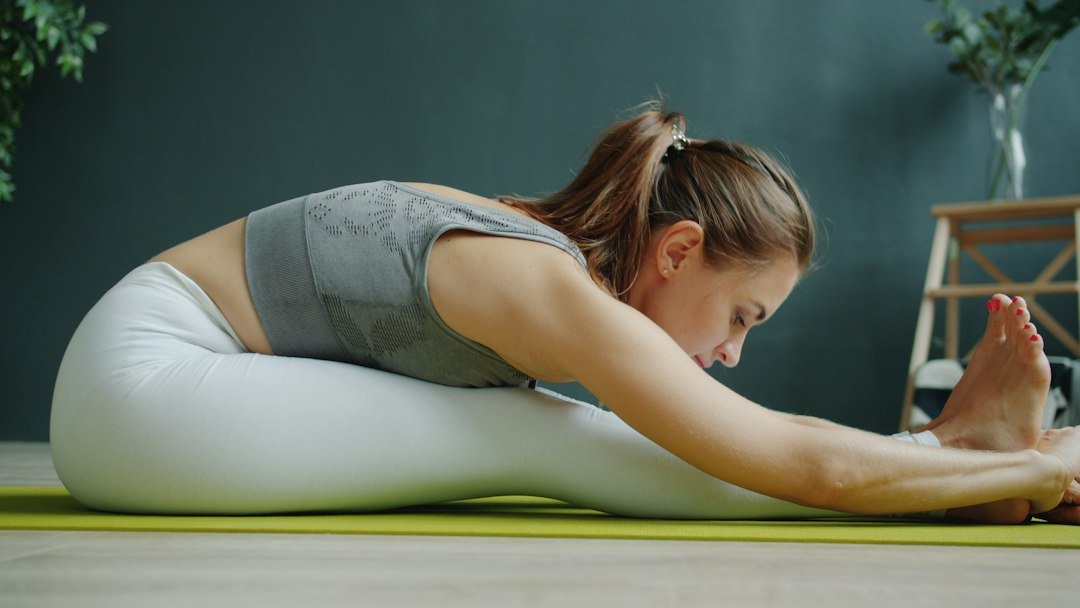
1. Seated Forward Fold — relieve hamstrings and low back
How: Sit with legs extended, flex feet, hinge from the hips and reach toward your shins or feet. Keep a long spine; bend the knees slightly if your low back tenses.
Why it helps: Stiff hamstrings pull the pelvis backward and limit hip flexion, which shows up as low-back pain when bending.
Progressions/mods: Use a yoga strap looped around the feet to maintain length in the spine as you breathe into the stretch. For more challenge, straighten the legs gradually over weeks.

2. Supine Hamstring Stretch with Strap — safer deep stretch
How: Lie on your back, loop a strap around the ball of one foot, keep the opposite leg extended on the mat, and draw the strapped leg toward you with a straight (or slightly bent) knee. Hold and breathe into any resistance.
Why it helps: Pulling from the foot keeps the pelvis stable so the stretch targets the hamstring rather than rounding the low back.
Mod: Bend the knee more to reduce intensity. Use this as a nightly routine after sitting long periods.
3. Low Lunge (Anjaneyasana) — open hips and quads
How: Step one foot forward into a low lunge, back knee on the mat. Square hips forward. Squeeze the glute of the back leg and tilt the pelvis slightly forward to feel a stretch across the front of the hip and upper thigh.
Why it helps: Tight hip flexors limit hip extension needed for walking, running and standing upright.
Hands-on options: Place hands on your front thigh for balance, or lift arms overhead to deepen the stretch. Keep the torso upright if you have low-back sensitivity.
4. Figure Four Hip Opener — targeted external rotation
How: Lie on your back, cross the ankle of your right leg over the left thigh just above the knee, and draw the left thigh toward you. Keep both hips on the mat and avoid forcing the crossed knee toward the floor.
Why it helps: This stretch loosens the deep external rotators and gluteal muscles that commonly tighten from long sitting.
Progression: Move to a seated version or add small pulses toward the chest for extra release.
5. Downward Dog with Heel Variations — whole posterior chain
How: From hands and knees, press hips up and back into Downward Dog. Pedal your heels slowly: bend one knee while straightening the opposite leg, then switch. Try holding one heel toward the floor for 20–30 seconds.
Why it helps: Down Dog lengthens calves, hamstrings and spine while strengthening shoulders.
Note: If shoulders feel weak, practice with hands on a raised surface (block or couch) to reduce load.
6. Thread-the-Needle — shoulder and upper back mobility
How: From hands and knees, slide your right arm underneath the left arm, lowering your right shoulder and temple to the mat while keeping the left hand where it is for support. Breathe into the rotation.
Why it helps: Many of us sit rounded forward; this movement opens the thoracic spine and relieves shoulder tension without heavy loading.
Variant: Reach the left arm overhead and up toward the ceiling to intensify the rotation.
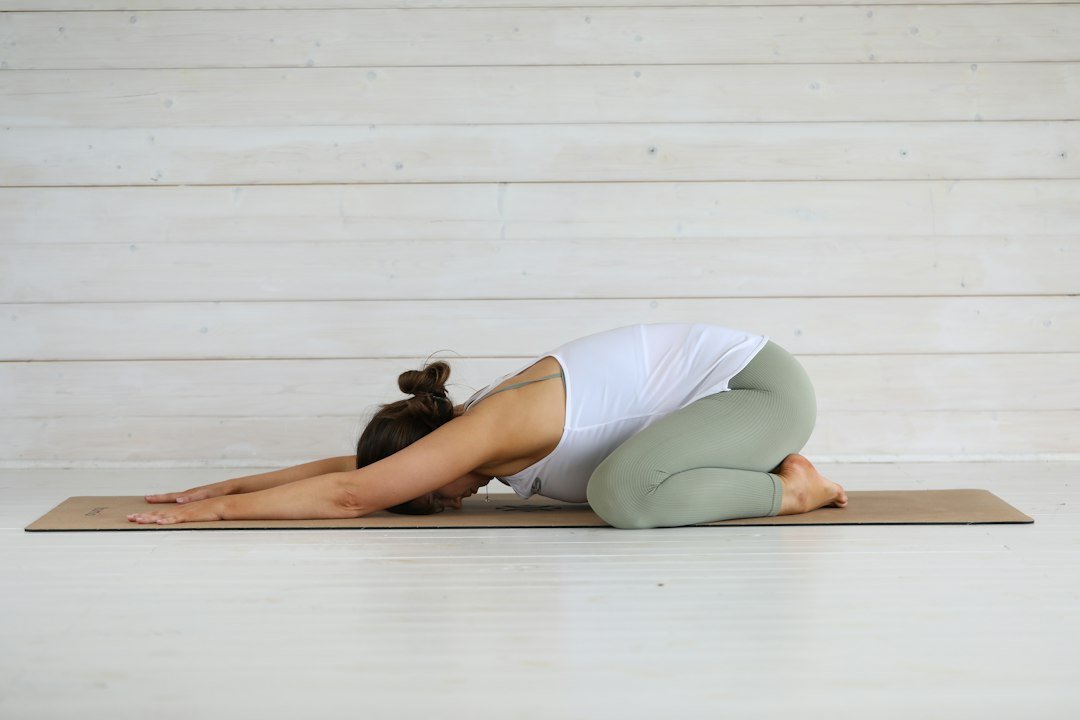
7. Child’s Pose with Wide Knees — decompress the low back and hips
How: Kneel and sit back on your heels, then widen the knees to the edges of the mat and walk your hands forward. Rest your forehead down and breathe deeply, letting the lower back release.
Why it helps: A restorative stretch that reduces spinal compression and gives the hips a gentle external rotation while calming the nervous system.
When to use props and one recommended tool
Props help maintain alignment and reduce compensation. Use a yoga strap for hamstring and seated stretches; a wheel supports thoracic extension and gentle backbends when your spine feels tight.
Product suggestion: if you want a single tool that offers both safer stretching and mild back support, try our top-ranked Yoga Wheel (ID 2129), which is well-suited to guided thoracic opening and balance work after building base mobility.
Simple weekly plan to make progress
Beginner (3 times/week): 10–15 minute circuit doing each stretch 30s, once per side. Intermediate (4–5 times/week): 2 rounds, 45–60s holds, add gentle dynamic reps. Advanced: incorporate deeper variations, full-length holds and integration into your movement training.
Safety notes and common mistakes to avoid
Do not force range beyond where you can breathe smoothly. Watch for compensations: rounding the low back in forward folds, hiking the shoulder in lunges, or gripping the neck. If a stretch produces sharp pain, stop and reassess alignment or choose a milder modification.
- Can you breathe smoothly into each position? If not, ease off.
- Have a strap or block nearby for modifications.
- Start with shorter holds and increase gradually over weeks.
- Balance stretching both sides; don’t chase one-sided relief.
- Avoid stretching cold muscles — warm up with light movement if needed.
Seven targeted stretches address the most common tight spots—hamstrings, hips, shoulders and spine—using simple progressions and props. Practice regularly with attention to breath and alignment for steady improvements in flexibility and mobility.
How often should I do these stretches?
Three to five times per week is effective; even daily short sessions (10–15 minutes) help maintain gains if you’re consistent.
Will stretching reduce pain?
Stretching can reduce stiffness and improve movement patterns that contribute to pain, but persistent or sharp pain should be evaluated by a healthcare professional.
Should I stretch before or after exercise?
Use dynamic versions as a warm-up before activity and the longer static holds afterward to aid recovery and flexibility.
Can I use these if I have limited mobility?
Yes—use props, reduce the range, and focus on breathing and small consistent progressions; consider consulting an instructor for personalized modifications.
Which stretch helps with rounded shoulders?
Thread-the-needle and chest-opening variations of Downward Dog are particularly effective for thoracic extension and shoulder opening.